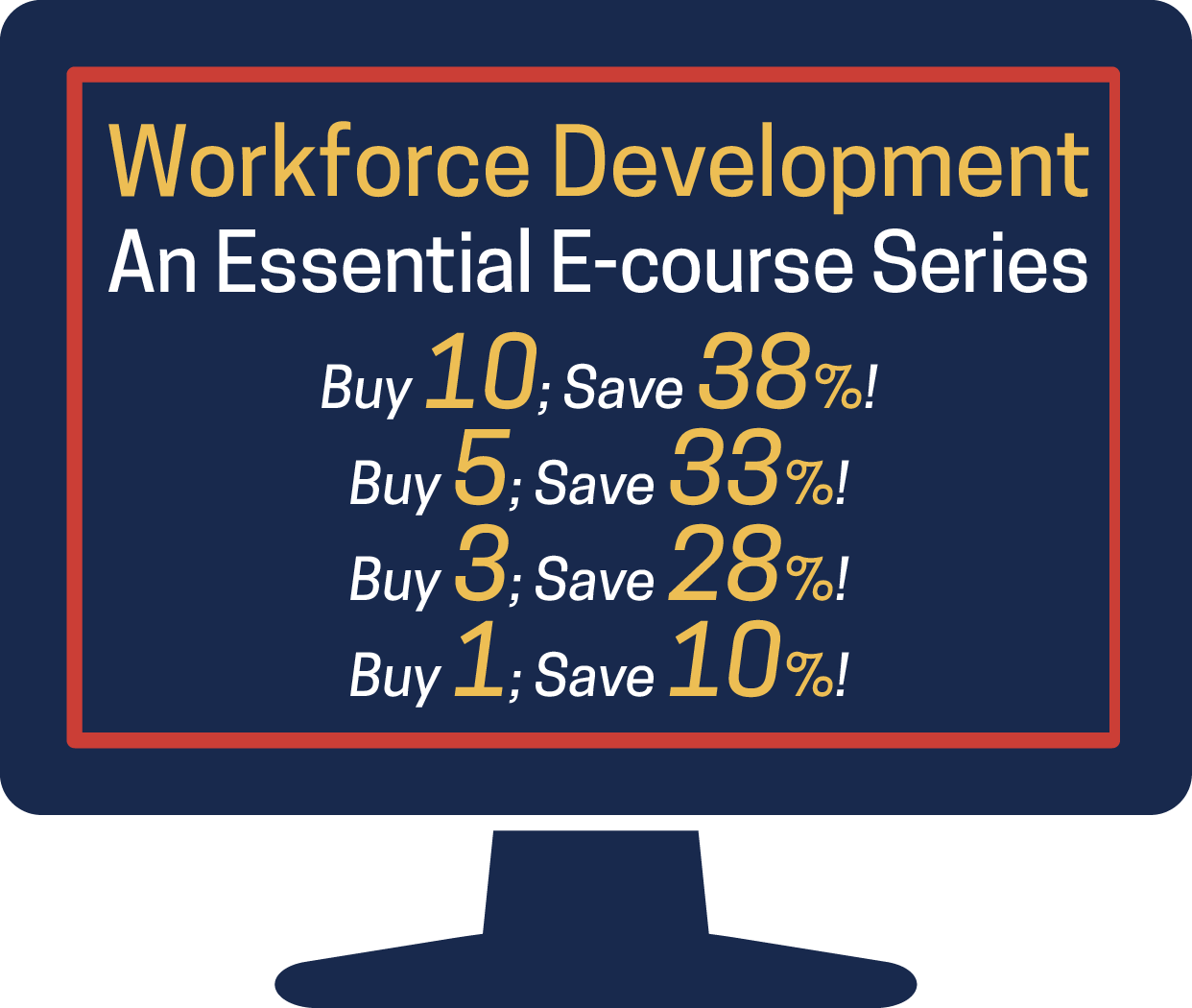
Refresh Your Skills
Take a professional development course on your own time and at your own pace. Our e-courses address five persistent challenges workforce development professionals face:
Navigating the Workforce Development System
Designing Impactful + Data-Driven Programs
Preparing + Connecting Jobseekers to Opportunity
Strengthening Employer + Industry Partnerships
Enhancing Leadership, Equity + Resilience
For teams who want to do professional development together, we can offer group access to e-courses followed by Implementation Coaching. For more information, click here.
Skill Up with WPTI’s Fundamental E-courses
“This Workforce Development series has helped me create win-win scenarios for both jobseekers and employers, ensuring mutual success and greater impact.”
– Julissa F, Program Director
Browse the Courses
Getting an employer's attention is hard.
In an age when companies have no shortage of ways to fill open positions – job boards, social media, staffing agencies, government-funded career centers, educational institutions, for-profit trade schools, nonprofit workforce development programs, their own websites, and more – competition for the eyes and ears of hiring managers can be overwhelming.
Nonprofit job developers, in particular, face numerous roadblocks to employer engagement. All too often, marketing budgets are limited, sales technologies several generations out of date, and little to no formal sales training for job developers. The challenges are further compounded by the divide between nonprofit and for-profit cultures, with employers cautious about hiring from community-based organizations.
Upon completion of this course, participants will be able to:
Apply the DUAL CUSTOMER APPROACH to balance the needs of employers and job seekers while fostering strong employer relationships.
Design and implement a PROSPECTING PLAN by identifying key business opportunities, analyzing local market activity, and targeting high-potential employers.
Craft and deliver compelling SALES PITCHES tailored to employers' needs, using refined communication techniques to build trust and secure partnerships.
REGISTER FOR THIS COURSE
A good job exists for everyone, regardless of background or experience.
Finding a job that pays well and offers opportunities for advancement in a competitive labor market, however, relies on a combination of factors: a well-written resume, strong interviewing skills, an understanding of how to find open positions, and a large network to provide referrals. Most of all, it requires belief in one's own value.
Workforce development programs play a vital role in connecting jobseekers to these pieces of the hiring puzzle. Without our programs, too many find themselves stuck in positions they don't like, earning too little for true self-sufficiency, or getting shut out of the labor market altogether.
In this self-paced, asynchronous course, you will learn about the 9 STEPS OF THE EMPLOYMENT READINESS CONTINUUM, taking an ASSET-BASED APPROACH TO JOBSEEKER COACHING to UNLOCK UNREALIZED POTENTIAL, and the fundamental resources and skills every workforce practitioner needs to help jobseekers land the job that will put them on the path to financial and personal success.
Upon completion of this course, participants will be able to:
Understand and apply the Employment Readiness Continuum and its role in guiding jobseekers through a structured pathway to employment success.
Apply Asset-Based Coaching Techniques to foster jobseekers’ confidence and motivation by highlighting their strengths and potential.
Develop actionable strategies to enhance the job search process, including implementing resources and practices that align with program goals and jobseeker needs.
REGISTER FOR THIS COURSE
TARGET AUDIENCE: First-time Managers and High Potential Employees on Management Track.
This training course is designed for new and aspiring supervisors who want to grow their management skills and get on the fast track to achieving leadership success. Becoming a new supervisor means increased responsibilities, taking on greater challenges, relating to colleagues in different ways, and acquiring new leadership skills.
Many first-time supervisors are often unprepared for the demands of this new role. The leap from worker to supervisor can be a daunting task that often leaves staff feeling anxious, overwhelmed, isolated and stressed. This training will cover proven management techniques and practical strategies you need to become a stronger, more confident leader.
Upon completion of this course, participants will be able to:
• Understand leadership fundamentals and issues all new supervisors/managers face
• Overcome the initial fears and anxieties of supervising others
• Develop their personal leadership strengths
• Gain communication techniques that earn the trust and respect of team members, peers, and managers
• Foster a culture of cooperation and collaboration among employees and peers
• Manage their time, priorities and projects to increase productivity
• Build and motivate your team
• Develop an action plan for your first 90–120 days
REGISTER FOR THIS COURSE
With the world becoming more mobile and diverse, diversity has taken on a new importance in the workplace. This e-course will help workforce practitioners understand what diversity, equity and inclusion is all about, and how to extend opportunities to all our program participants.
This course will:
Define commonly used DEI terms, concepts, and resources
Identify experiences related to implicit and explicit bias, discrimination, privilege, identity, and intersectionality
Explore and apply anti-oppressive, culturally responsive practices through fostering a work environment of safety and belonging for staff and community stakeholders
Demonstrate ability to advance DEI in the workplace and with training participants, by applying learning into practice
Identify strategies for engaging employer partners that employ sound DEI practices aligned with the organization
REGISTER FOR THIS COURSE
The transition from adolescence to adulthood is a critical time for young people. Today, as an ever-increasing number of good jobs – those that provide a living wage – require some kind of post-secondary education and training beyond high school, moving to adulthood and economic self-sufficiency can be even more challenging for many young people.
As practitioners, having an understanding of the labor market, industry sectors and occupations, and the various career, training, and education pathways available today from college, credentials, and apprenticeships to name just a few, is essential in creating equitable opportunities for economic and personal success for young adults. Equipped with this knowledge and understanding, we can effectively educate, guide, and support young adults in exploring the post-secondary options available to them after earning their high school diploma or GED, and to help them make the right decision for their future career and personal goals.
TARGET AUDIENCE: Career Coaches and Counselors, Job Placement Specialists, Training and Development Specialists, Workforce Development Professionals, Managers and Supervisors.
Upon completion of this course, participants will be able to:
Understand post-secondary pathways and how these pathways can contribute to economic and personal fulfillment;
Facilitate and champion youth-centered decision-making and goal-setting for career exploration and planning; and
Gain practical strategies to enhance your impact as a career coach.
REGISTER FOR THIS COURSE
RETENTION STARTS ON DAY 1. And continues every day after. Simply put, it’s hard to help jobseekers who don’t show up or participate regularly.
The path to good employment starts with active engagement throughout all phases of the workforce development program and continues after job acquisition. Programs can’t control every factor that causes participants to disconnect, but the right approaches boost completion rates.
Successful program retention is built on a mix of strategies that can vary depending on the specific context and population of the program. Here are a few:
MARKETING & MESSAGING that clearly and repeatedly explains the benefits of participation and demonstrates the program’s track record of success encourage commitment.
ACCESSIBILITY & PERSONALIZED SERVICES to meet the unique needs of each participant, regardless of their physical abilities, educational attainment, language proficiency, work history, or other potential barriers to employment.
REGULAR COMMUNICATION, check-ins, updates, and requests for feedback help participants feel connected and involved.
COMMUNITY BUILDING through group activities, peer support groups, or online forums foster a sense of connection among participants.
INCENTIVES & RECOGNITION that reward achievement and positive behavior make participants feel appreciated and increase positive association toward the program.
In this training you will learn how to infuse retention strategies across four distinct stages of the workforce development program lifecycle:
RECRUITMENT, INTAKE, & ORIENTATION: the critical first encounters that set the tone for the program experience.
SKILLS TRAINING & JOB READINESS PREPARATION: the “active” phase of engagement with program services that enhance work-related knowledge and reduce barriers to employment.
THE JOB SEARCH: supporting jobseekers during the often-lengthy process of identifying appropriate job openings, submitting applications, waiting for interview invitations, participating in interviews, and finally receiving a job offer.
FOLLOW-UP AFTER JOB ACQUISITION: helping newly employed participants navigate the first days on a new job, establish routines that balance work and other responsibilities, create the foundation for financial independence, and plan for future career advancement.
KEY COURSE TAKEAWAYS:
Creating an atmosphere of success and inclusion that fosters participation from Day 1.
Effective communication methods to provide clear information on purpose, process and payoff.
Implementing free or low-cost retention rewards and incentives to encourage positive behaviors.
Strengthening interpersonal connections between program and jobseekers to boost attachment throughout the program lifecycle.
REGISTER FOR THIS COURSE
Technology, from automation, artificial intelligence, digital tools, and software to social media, has dramatically changed how we live, work, study, shop, and do business. Every day, there seems to be a new technological advancement being announced.
For workforce development practitioners and organizations, understanding the technology, its impact on the labor market, industry sectors, and occupations, and the skills that we and our jobseekers need for this increasingly technological world is essential. Amid a changing labor market and economy, understanding and adapting to these technological changes is also a vital component to increasing equity, job quality for all workers, and providing opportunities toward living-wage jobs, career pathways, and economic mobility.
In this course, we will focus on digital transformation and how it impacts workforce development programs. Digital transformation is the process of developing organizational and technology-based capabilities that will allow your organization to operate and deliver more effective and efficient programs and services, improve the job seeker experience, and ultimately help more jobseekers obtain economic sustainability and mobility.
The course objectives include:
· Understand the meaning of Digital Transformation and its importance for workforce practitioners
· Describe the impact of changing labor markets on jobseekers
· Identify the consequences of digital skills gaps
· Identify techniques for streamlining organizational processes
REGISTER FOR THIS COURSE
Do you want to do more for your jobseekers than just help them get a job?
We know that a minimum wage job is not a living wage job. How do you support jobseekers to create a pathway to economic and personal success?
One strategy for helping your jobseeker start on the path to economic and personal success is the Career Pathways Framework. The Career Pathways Framework is a holistic approach to career and education planning and placement designed to meet individuals wherever they are on their career journey.
The Career Pathways framework is focused on long-term career success and economic sustainability rather than rapid attachment to employment. It provides workforce development practitioners with the tools and resources to help individuals connect their skills, interests, and experience to the right career for them.
TARGET AUDIENCE: Career Coaches and Counselors, Job Placement Specialists, Training and Development Specialists, Workforce Development Professionals, Managers and Supervisors.
Upon completion of this course, participants will be able to:
Learn how to effectively use Career Maps as tools for career development.
Utilize Career Pathways and Career Maps to formulate and refine personal career goals.
Explore the role of a coach in applying the Career Pathways Framework to guide jobseekers.
Master the use of interest inventories to assist individuals in creating meaningful career goals.
Develop skills in crafting comprehensive career plans encompassing both short-term and long-term objectives.
Define the responsibilities and functions of a coach in the context of career guidance.
Apply coaching techniques to aid jobseekers in making well-informed career decisions.
Create actionable plans for achieving both short-term and long-term career goals.
Using a "trauma lens" means understanding that trauma continues to impact our brains and bodies long after the actual events or circumstances have passed. Trauma affects workforce development program participants and staff alike. Left unaddressed, it can lead to negative behaviors, exhaustion, and ultimately undermine our ability to create successful pathways to employment.
Upon completion of this course, participants will be able to:
Define trauma, vicarious trauma, and resilience
Apply a trauma lens to unique challenges and opportunities in workforce development programs
Utilize promising practices in trauma-informed programming for participants and staff
Create an action plan for self-care
Nearly half of all children in the U.S. have experienced trauma, including abuse, neglect, separation from loved ones, poverty, and community violence. There is incredible potential for staff in workforce development programs to create healing spaces and relationships -- but easier said than done when working on accountability, responsibility, and limit-setting with program participants.
REGISTER FOR THIS COURSE